Is a Capsule Hotel Worth It in Seoul? An Honest Answer
The honest answer starts somewhere unexpected: there is no such thing as a capsule hotel in Korean law.
Published 6 October 2026 · Facts checked 6 October 2026
By Sunday Morning
The short answer
Yes for one or two nights. Usually no for a week. And the reason has nothing to do with claustrophobia, which is the thing everyone asks about and the thing that turns out not to matter.
What decides it is that capsule hotel is a marketing word, not a legal one. We read the full text of the Public Health Control Act, its decree and its enforcement rules, and the Tourism Promotion Act decree. The word for capsule appears in none of them. Neither does gosiwon, nor the building-code term for one.
So every place in Seoul selling you a capsule is registered as something else, and the four things it can be owe you very different things. That is the useful answer to the question, and it beats reading reviews.
What you are actually booking
Four categories. Three are lodging businesses. One is not.
- General lodging, 숙박업(일반). The ordinary hotel and motel registration.
- Residential lodging, 숙박업(생활). The same thing plus cooking facilities. That is the entire legal difference between the two, written into one line of the decree.
- Hostel, 호스텔업. A tourism registration. No minimum room count, and shared toilets, showers and a kitchen are expressly permitted.
- Gosiwon, 고시원. Not a lodging business at all.
The one that is not a hotel
A gosiwon has a statutory definition in exactly one place: the fire-safety act for multi-use premises. It exists there so the building can be inspected, not so a visitor can sleep in it. Under the Building Act it is a 다중생활시설 — a neighbourhood facility below 500 square metres, and a lodging-class building only above that. Nothing in that definition owes you a single thing a traveller needs.
This is not a warning that such places are dangerous. It is a warning that they are a different product: designed around a month, and sold to you by the night.
What each one actually owes you
This is the part that inverts what most people assume.
A general lodging business is not required to give you a bathroom. Read the facility standards table in full and the requirement for a bath or shower in every room sits only under residential lodging. Under general lodging there is no bathroom requirement at all. The absence is the fact. A capsule floor with a shared washroom down the corridor is not cutting a corner — it is the standard.
The hostel registration is the one that promises you a common room. It sets no minimum number of rooms and expressly allows shared toilets, showers and a kitchen, but it must provide a cultural and information exchange facility. That is the lounge. It is a legal requirement, not an amenity someone thought of. The well-rated capsule places in Seoul get praised for their lounge, and this is why they have one.
A small hotel is 20 to 29 rooms, each with its own bath. The decree sets that band and requires a bath or shower in every room. Breakfast and foreign-language staff appear there as examples of what else it should carry, inside an open-ended clause rather than a closed list — so do not assume either is guaranteed.
And the rule about buildings. A lodging business occupying only part of a building must hold its own floor, or have 30 rooms or more, or take up at least a third of the building's gross floor area. Any one of the three satisfies it, not all three. A city or province may relax it by ordinance; exactly one has, and it is Incheon, not Seoul. So a capsule place on a single floor above a chicken restaurant is legal because of the floor, not in spite of it.
- Capsule hotel in Korean law
- No such categoryThe word appears in none of the four relevant statutes
- General lodging, 숙박업(일반)
- No per-room bathroom requiredEnforcement rules table 1, in force 14 July 2026
- Residential lodging, 숙박업(생활)
- Bath or shower in every roomDiffers from general lodging only by cooking facilities
- Hostel, 호스텔업
- No minimum room countShared bathrooms allowed, exchange facility required
- Small hotel, 소형호텔업
- 20 to 29 rooms, bath in eachBreakfast and language staff are examples, not a closed list
- Part of a building
- Own floor, or 30+ rooms, or a third of the floor areaAny one of the three. Only Incheon relaxes it
- Gosiwon, 고시원
- Not a lodging businessDefined only in fire-safety law
- Bath houses, 목욕장업
- May not provide bedding for sleepingLarge towels and pillows for a short rest are allowed
- Registered hostels in Seoul
- 119Year end 2023, the newest year published
- Subway base fare, transit card
- ₩1,550
- First ride before 06:30
- 20% off the base fareTransit card only, and not if you arrive by transfer
- Night bus, 23:00 to 06:00
- ₩2,500No early-bird discount
- Subway locker, 4 hours
- From ₩2,200 weekday, ₩3,100 weekend05:00 to 24:00 only. Not overnight
- Staffed luggage desk, 4 hours
- From ₩3,000 weekday, ₩4,000 weekend09:00 to 22:00, six stations
- Foreign card at the gate
- Not possibleSubway Lines 1 to 8 scheduled for EMV in 2027
- Foreign card at the ticket machine
- Yes, since 17 March 2026440 machines, 273 stations, about 3.7% service fee
| Capsule hotel in Korean law | No such categoryThe word appears in none of the four relevant statutes |
|---|---|
| General lodging, 숙박업(일반) | No per-room bathroom requiredEnforcement rules table 1, in force 14 July 2026 |
| Residential lodging, 숙박업(생활) | Bath or shower in every roomDiffers from general lodging only by cooking facilities |
| Hostel, 호스텔업 | No minimum room countShared bathrooms allowed, exchange facility required |
| Small hotel, 소형호텔업 | 20 to 29 rooms, bath in eachBreakfast and language staff are examples, not a closed list |
| Part of a building | Own floor, or 30+ rooms, or a third of the floor areaAny one of the three. Only Incheon relaxes it |
| Gosiwon, 고시원 | Not a lodging businessDefined only in fire-safety law |
| Bath houses, 목욕장업 | May not provide bedding for sleepingLarge towels and pillows for a short rest are allowed |
| Registered hostels in Seoul | 119Year end 2023, the newest year published |
| Subway base fare, transit card | ₩1,550 |
| First ride before 06:30 | 20% off the base fareTransit card only, and not if you arrive by transfer |
| Night bus, 23:00 to 06:00 | ₩2,500No early-bird discount |
| Subway locker, 4 hours | From ₩2,200 weekday, ₩3,100 weekend05:00 to 24:00 only. Not overnight |
| Staffed luggage desk, 4 hours | From ₩3,000 weekday, ₩4,000 weekend09:00 to 22:00, six stations |
| Foreign card at the gate | Not possibleSubway Lines 1 to 8 scheduled for EMV in 2027 |
| Foreign card at the ticket machine | Yes, since 17 March 2026440 machines, 273 stations, about 3.7% service fee |
Three trips, three answers
The six-hour layover: yes
This is the trip the format was built for. You want to be horizontal, clean and near a station, and you want to pay for hours rather than for a night. Nothing else in Seoul does that as cheaply.
Two things people try instead, and what is wrong with them. A bath house is not a lodging business — it is registered as a bathing establishment, and the rules for that registration state plainly that bedding for sleeping must not be provided, with large towels and pillows for a short rest allowed and that is the whole of it. You can rest there. You are not booking a bed.
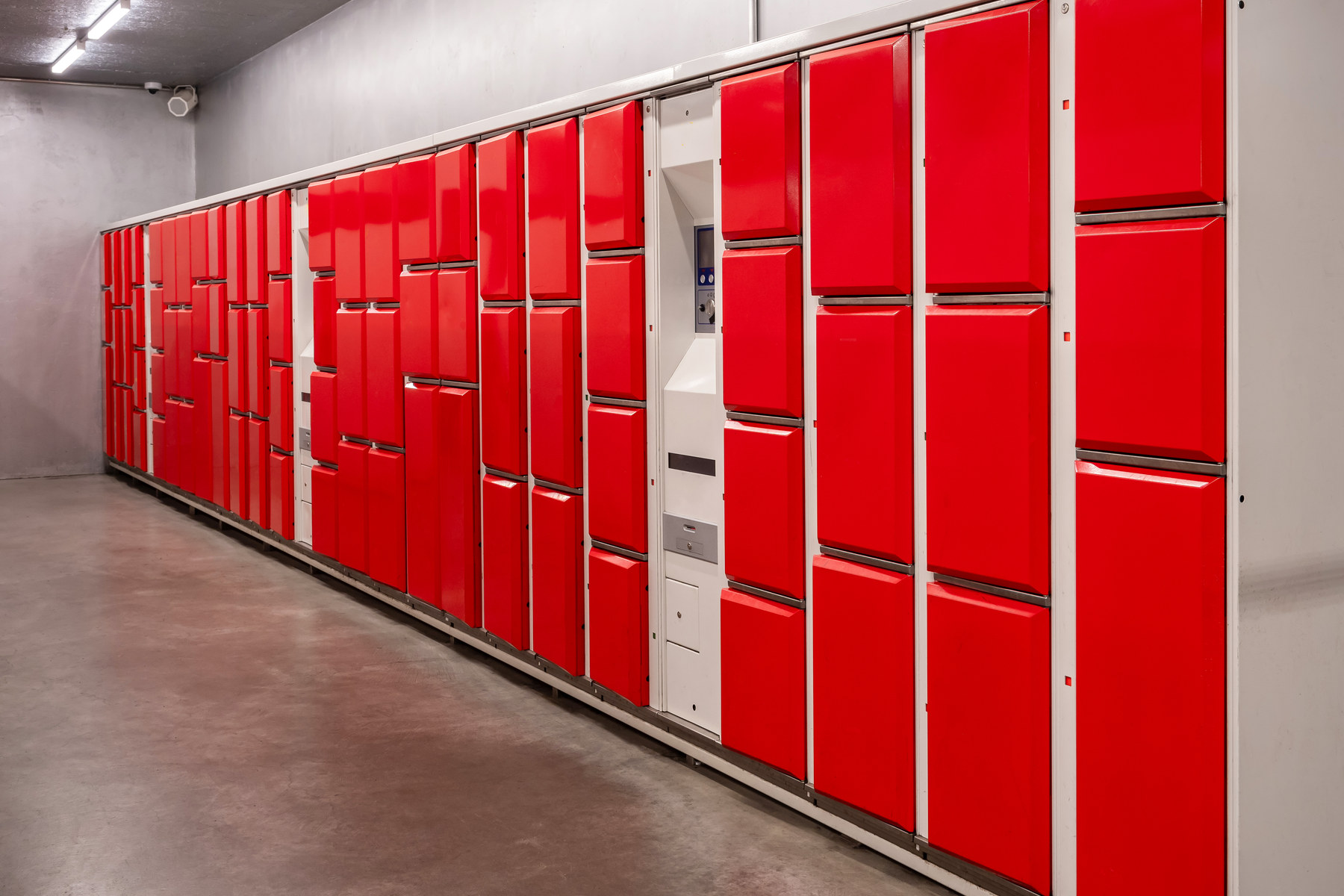
And the lockers close. Subway storage lockers run 05:00 to 24:00, and the operator states outright that you can neither deposit nor collect outside those hours. The staffed luggage desks run 09:00 to 22:00 at six stations. So the plan where you leave a suitcase in the subway overnight and collect it for an early flight does not exist. If you are landing in the small hours we wrote the whole night out in Arriving in Seoul at 5am.
The five-night first trip: usually no
Skip it. And not because of the bed.
Five nights means laundry, a suitcase that has to live open, somewhere to sit that is not a bed, and a place to be jet-lagged for an afternoon without being in a corridor. A capsule gives you none of those. Meanwhile the money you save shrinks every night, because the gap between a capsule and a small private room is widest on night one and narrowest by night five.
For a week, buy the room and spend the difference on being in the right neighbourhood instead. Which one that is, honestly, is the whole of Where to Stay in Seoul.
The one-night trip: it depends on the station, not the room
For a single night the room barely matters. You will be in it for seven hours with your eyes shut. What matters is how many trains stand between it and the two or three things you came for.
This is where a capsule earns its keep properly: it buys you a central address at an outer-district price, and on a one-night trip a central address is worth more than a door. The arithmetic for a night and a day is set out in One Night in Seoul, Alone.
The numbers that decide it
Work it in both directions. Two extra subway journeys a day costs ₩3,100 at the base fare, so a bed that is ₩3,000 a night cheaper and two stops further out is already a wash before you count the walking or the waiting.
If you are moving early, the first ride of the day is 20% off the base fare with a transit card — but not if you reach that gate by transferring from something else. The night buses run 23:00 to 06:00 at ₩2,500 and carry no early-bird discount at all, so the cheap late journey and the cheap early journey are not the same trick.
And the thing that catches people at the gate itself: you cannot tap a foreign contactless card on Seoul transit. The published plan re-equips subway Lines 1 to 8 with EMV terminals in 2027. Since 17 March 2026 you can at least buy and charge a transit card with a foreign Visa or Mastercard at 440 new ticket machines across 273 stations, at an average service fee of about 3.7%.
How to read a listing before you book
None of this helps unless you can tell which one you are looking at. Four things to check, in this order.
- Does it call itself a hostel? If it does, there is a common room, because the registration requires one. If it does not, there may not be.
- Is there a bathroom inside the capsule? Almost certainly not, and that is normal rather than a defect. What matters is the number of showers per bed, which no law sets and no listing publishes. Ask.
- Does it describe itself in months, or use the word gosiwon? Then it is not a lodging business, and you are renting a room designed for a long stay.
- How much of the building does it hold? One floor is enough on its own to make the registration legal, so a single floor above a shop is not a bad sign. It is simply the most common shape this takes.
There is one check we wanted to hand you and cannot. We found no public lookup we could verify that maps a trading name to its registration category, so the only reliable way to know what you have booked is to ask the property. How clearly it answers that question tells you something useful in itself.
If you’re staying nearby
Sunday Morning
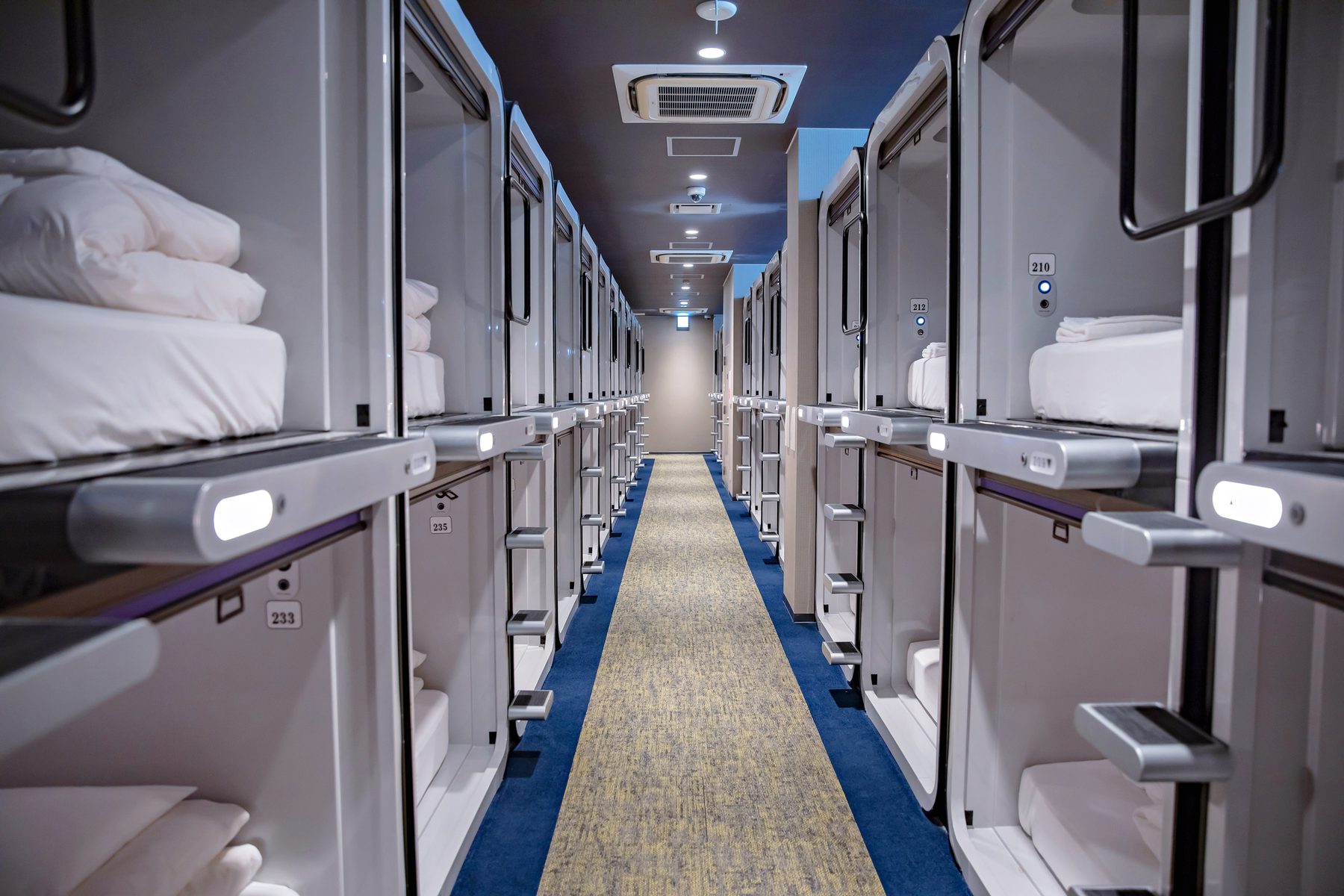
- Sunday Morning is a capsule hotel in Jongno-gu, a short walk from Gwanghwamun.
- Capsules start at ₩49,000. Check-in is self-service around the clock, there is a female-only floor, and lockers are free and not subject to the subway locker hours described above.
- Those are the property's own figures and cannot be checked against an outside source, which is the same caveat we would apply to any hotel quoting its own rate.
Sources
- Korean Law Information Centre, Public Health Control Act enforcement rules, table 1 (in force 14 July 2026)
- Korean Law Information Centre, Public Health Control Act enforcement decree, article 4 (in force 1 January 2026)
- Korean Law Information Centre, Tourism Promotion Act enforcement decree, table 1 (in force 4 August 2026)
- Korean Law Information Centre, Special Act on the Safety Control of Multi-Use Premises, enforcement decree (in force 1 July 2026)
- Korean Law Information Centre, Building Act enforcement decree, table 1
- Public Health Control Act enforcement rules, table 4, obligations of bathing establishments
- Korea Tourism Data Lab, national tourism business register (data updated 4 July 2024)
- Seoul Transportation Corporation, fare guide, T-Locker and T-Luggage
- Seoul Metropolitan Government, public transport fare guide
- Seoul Metropolitan Government, foreign cards at station ticket machines, 16 March 2026
- Seoul Metropolitan Government, open-loop payment rollout plan, 16 October 2025
Facts verified 6 October 2026. The statutory points are quoted from the law as in force on that date; laws and fares both change. If you find something here that is out of date, tell us and we will check it again.
Photography licensed via Freepik. Images are illustrative and may not show places exactly as they are today.
Related guides
- One Night in Seoul, Alone: Where to Stay and What to CutA night and a day is not much time. The whole trick is removing journeys, not adding sights.
- Where to Stay in Seoul: An Honest Neighbourhood Guide for First-TimersSeven areas, what each is actually for, and the two scheduling rules that will wreck your trip if nobody tells you.
- 3 Days in Seoul Without Wasting OneComing soon